


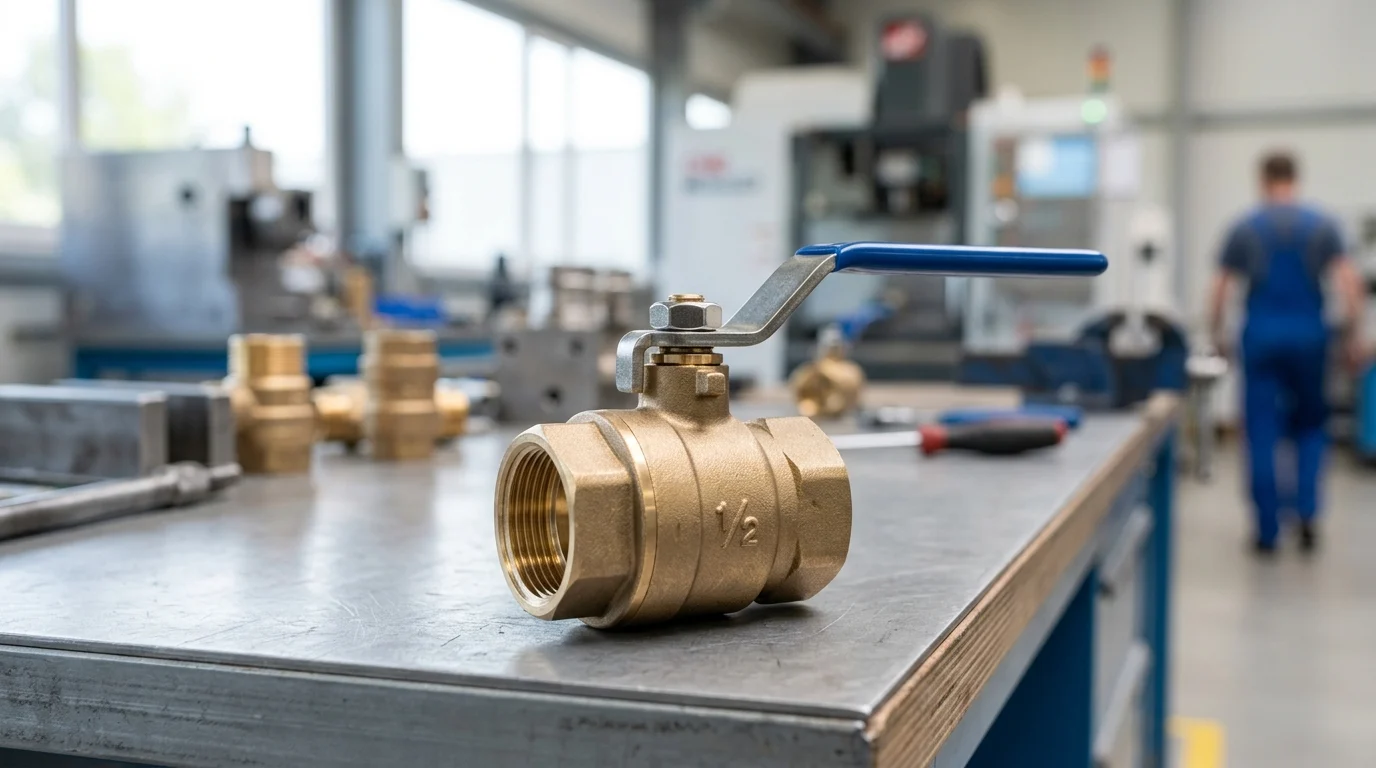
Scaling brass valve production is not just a matter of making more parts faster; it is a test of whether every casting, thread, seal, and pressure-rated component can meet the same specification thousands of times a day. In plumbing, HVAC, and industrial fluid systems, a single non-conforming valve can trigger leaks, warranty claims, project delays, or long-term reputational damage. This article examines how manufacturers maintain consistent valve quality at scale through controlled materials, precision machining, inspection discipline, automated production, and cost-of-poor-quality management. For procurement teams and OEM buyers, understanding these systems helps separate dependable suppliers from those that only appear competitive on price.
Why Brass Valve Manufacturing Quality Matters
In the global fluid control industry, brass valves serve as critical components across plumbing, HVAC, and industrial applications, often designed for 10- to 20-year operational lifespans. As demand for residential and commercial infrastructure grows, manufacturers face the dual challenge of scaling production output while maintaining strict tolerances and material integrity. Achieving consistent quality at scale is not merely a production metric; it is a fundamental requirement that dictates the operational safety and lifespan of fluid handling systems.
When procurement teams source brass valves, they are investing in the long-term reliability of their own product lines and installations. Because a minor variance in manufacturing can lead to catastrophic system failures, understanding the methodologies behind quality control is a primary concern for industry stakeholders.
Meeting Volume Growth and Tight Delivery Windows
Modern industrial projects and retail distribution networks demand high-volume production without compromising precision. To supply global supply chains, top-tier facilities frequently process orders that can, for example, exceed 500,000 units per month—a benchmark of advanced scalability for high-demand product lines. To meet these targets, facilities must optimize their production cycles to fit within tight delivery windows, which typically range from 30 to 45 days.
Scaling production requires a seamless integration of raw material procurement, automated machining, and rapid assembly. If a facility lacks synchronized quality control mechanisms, the sheer speed of high-volume manufacturing can easily result in a higher frequency of non-conforming parts. For context, a mere 1% increase in defect rates on a 500,000-unit run yields 5,000 non-conforming parts, causing shipment delays and disrupting downstream project timelines.
Reducing Cost, Reliability, and Brand Risk
While a primary goal of procurement is reducing cost, buyers must simultaneously protect product reliability and mitigate brand risk. The financial implications of inconsistent brass valve manufacturing extend far beyond the initial purchase price. The cost of poor quality (COPQ)—which can consume 5% to 15% of total procurement spend if unmanaged—manifests in two distinct ways: internal failure costs, such as factory scrap and rework, and external field-failure costs, including product recalls, warranty claims, and extensive field replacements. High external defect rates significantly erode a buyer's profit margins when factoring in reverse logistics and labor costs for replacement.
Furthermore, brand reputation is highly sensitive to component reliability. A single batch of faulty valves that leaks under standard operating pressure can permanently damage a distributor's standing in the market. Consequently, investing in manufacturers who employ rigorous, scalable quality systems is a proactive measure to mitigate financial exposure and protect brand equity.
What Consistent Brass Valve Quality Means

Defining quality in brass valve manufacturing requires a technical understanding of the product's operational environment. Consistent quality means that the millionth valve produced performs identically to the first, adhering to strict mechanical and chemical specifications. This consistency is achieved through meticulous control over material science and dimensional engineering.
Critical Quality Requirements for Reliable Valves
Reliable brass valves must withstand fluctuating pressures, temperature extremes, and corrosive media. Critical quality requirements include a verified design burst pressure tolerance—often engineered to exceed 40 bar for specific PN40-rated industrial applications—and the ability to maintain seal integrity across a temperature range of -20°C to 120°C. However, these thresholds vary significantly by valve type, pressure class, and seal material, meaning they should not be treated as universal specifications for all products.
Beyond basic functionality, valves must exhibit low torque operation (typically requiring 2 Nm to 8 Nm of actuation force for standard residential sizes), ensuring that end-users can actuate the valve smoothly over thousands of cycles without the stem binding or the seals degrading.
Material Composition and Dimensional Accuracy
The foundation of a high-quality valve is its material composition. Standard applications typically utilize CW617N brass, which offers an optimal balance of machinability and mechanical strength. However, because CW617N contains lead, it faces strict regulatory restrictions for potable water applications in many regional markets. Aggressive water conditions necessitate Dezincification Resistant (DZR) brass, such as CW602N, to prevent structural degradation.
It is important to note that DZR and lead-free compliance are distinct material properties. While global regulations—such as the U.S. Safe Drinking Water Act or local European plumbing codes—increasingly mandate lead-free brass (under 0.25% lead) for potable water systems, some aggressive potable-water applications require advanced alloys that satisfy both DZR and lead-free criteria simultaneously. Because lead-free and DZR regulations vary significantly by jurisdiction and evolve over time, buyers must verify current local codes rather than relying solely on static alloy classifications.
Coupled with exact material composition, dimensional accuracy is paramount. Wall thickness must be uniformly maintained to prevent weak points, and thread profiles must strictly adhere to international standards (such as ISO 228 or NPT) to guarantee leak-free connections.
Key Quality Metrics to Compare
When evaluating brass valve consistency, buyers should compare key material metrics that dictate performance and compliance. The table below outlines the standard brass alloys used in manufacturing and their corresponding quality thresholds:
| Material Grade | Max Lead (Pb) Content | Typical Tensile Strength | Primary Characteristic | Typical Application |
|---|---|---|---|---|
| CW617N (Standard) | 1.5% - 2.5% | ~380 - 430 MPa | Excellent machinability | HVAC, Non-potable water |
| CW602N (DZR) | 1.5% - 2.5% | ~320 - 360 MPa | Resists dezincification | High-mineral water systems |
| CW724R (Lead-Free) | < 0.25% | ~400 - 450 MPa | Regulatory compliance | Potable drinking water |
By benchmarking these metrics, procurement teams can ensure the valves they source are metallurgically appropriate for their intended market. Buyers must also verify if their specific application requires dual-certification, such as a lead-free DZR alloy, rather than treating these categories as mutually exclusive.
How Manufacturers Control Quality During Production
Transforming raw brass ingots into precision fluid control devices requires a multi-stage manufacturing process. At scale, human inspection alone is insufficient to guarantee quality. Leading manufacturers implement highly controlled, automated procedures at every stage of production to eliminate variables and ensure strict repeatability.
Brass Alloy Selection and Incoming Inspection
Quality control begins before production even starts. Premium manufacturers subject incoming raw brass materials to rigorous optical emission spectroscopy. This testing verifies that the alloy composition matches the required standard (e.g., confirming copper content is precisely between 57% and 59% for standard forging brass).
If the incoming material contains excessive impurities like iron (typically capped at 0.3%) or tin, it can lead to brittle forgings or rapid tool wear during machining. Strict incoming inspection protocols quarantine non-conforming raw materials before they enter the manufacturing stream, preventing widespread batch failures.
Casting, Forging, Machining, Threading, and Assembly Controls
The core of brass valve production relies on hot forging and precision machining. To ensure consistency, manufacturers control several distinct stages:
- Hot Forging: Temperature control is critical; for standard forging brass, billets are typically heated to a precise window of 700°C to 800°C, though this benchmark varies by specific alloy. Forging outside the optimal range can cause micro-cracking or incomplete cavity filling.
- CNC Machining: Following forging, Computer Numerical Control (CNC) machining centers cut internal cavities and prepare the valve body. High-tier manufacturers calibrate their CNC machines to maintain tolerances that can be as tight as ±0.01 mm for critical dimensions, alongside surface roughness (Ra) targets of 0.4 to 0.8 µm for seating areas. Maintaining such exacting tolerances is a hallmark of premium manufacturing, ensuring that internal components like PTFE seats and brass balls align perfectly.
- Threading and Assembly: Thread profiles are cut to strict international standards, followed by automated assembly to guarantee smooth actuation and long-term leak prevention.
Process Steps That Improve Repeatability
To maintain repeatability across hundreds of thousands of units, factories utilize Statistical Process Control (SPC). Rather than just a process label, effective SPC involves plotting critical dimensions on control charts, establishing Process Capability Index (Cpk) targets of 1.33 or higher (indicating a theoretical defect rate of under 64 parts per million), and defining strict reaction rules. By measuring random samples at regular intervals, operators can detect tool wear and adjust machine offsets before dimensions drift out of tolerance.
Furthermore, the integration of automated assembly lines reduces human error. Automated stations apply exact torque specifications to valve bonnets and utilize robotic arms to insert O-rings without twisting or damaging the elastomers, drastically improving the first-pass yield rate to industry benchmarks of 98% or higher.
Testing, Compliance, and Traceability
A robust manufacturing process must be validated through comprehensive testing and compliance verification. Traceability and documented quality records provide the necessary assurance that every batch of brass valves meets both the manufacturer's internal standards and external regulatory requirements.
Pressure, Leak, Torque, and Dimensional Testing
The most critical validation for any fluid control device is its ability to hold pressure. Manufacturers typically perform 100% inline testing on fully assembled valves. High-volume production lines utilize automated pressure-decay sensors, typically pressurizing valves with air (for instance, between 6 to 10 bar for standard low-pressure valves) to detect micro-leaks (often defined as a pressure drop exceeding 0.1 bar over a 10- to 15-second cycle) without slowing down the line. However, it is important to note that inline pressure-decay parameters and hydraulic burst-test protocols vary significantly by valve pressure class, size, and applicable design standard; they are not one-size-fits-all thresholds. Alternatively, for smaller batches or specific visual checks, valves may be submerged in water for traditional bubble testing.
For high-pressure industrial applications, a statistical sample of each batch undergoes hydraulic burst testing. While a PN40 valve is engineered with a design tolerance exceeding 40 bar, routine batch validation is typically conducted at standard test pressures—such as 25 bar for specific PN25 or PN20 pressure classes—to confirm structural integrity. Additionally, torque testing is conducted to ensure the operating handle moves within the specified force range, confirming that the internal seals are neither too loose (causing leaks) nor too tight (causing premature wear).
Standards, Certifications, and Quality Records
Adherence to international standards is a non-negotiable aspect of modern manufacturing. Facilities must maintain rigorous quality management systems, often aligning with ISO 9001 principles, to ensure continuous improvement and standardized operating procedures.
Depending on the target market, valves must also carry specific product certifications, such as EN 13828 for European building networks or NSF/ANSI 61 for North American drinking water systems. Maintaining comprehensive quality records, including material test reports (MTRs) and batch testing data, ensures full traceability from the raw brass ingot to the final packaged product.
In-Process vs Final Inspection Checks
Effective quality assurance relies on a balance between in-process checks and final inspections. In-process checks occur directly on the factory floor, identifying dimensional deviations immediately after machining. This prevents additional value from being added to defective parts.
Final inspection, conversely, evaluates the finished product against Acceptable Quality Limit (AQL) standards. A standard benchmark for brass valves is an AQL of 1.5 for major defects and 4.0 for minor defects, meaning the lot is rejected if more than a statistically acceptable number of critical flaws are found. This dual-layered approach ensures only compliant products reach the shipping container.
How Buyers Should Evaluate Brass Valve Manufacturers
Selecting the right brass valve manufacturer is a strategic decision that impacts product safety, supply chain stability, and overall profitability. Buyers must look beyond the initial quotation and conduct a comprehensive evaluation of a supplier's operational capabilities, quality culture, and historical performance metrics.
Factory Capabilities, Quality Systems, and Defect Metrics
A thorough factory audit is essential for verifying a manufacturer's true capabilities. Buyers should assess the facility's production capacity, automation levels, and the sophistication of their testing laboratory. Understanding a supplier's Minimum Order Quantity (MOQ)—which, for example, might range from 3,000 to 5,000 pieces for custom brass valves—helps determine if their scale aligns with the buyer's procurement strategy.
Furthermore, evaluating defect metrics is crucial. Buyers should request historical data on first-pass yield rates and customer return rates, seeking partners who maintain field failure rates below 500 Parts Per Million (PPM).
Key Takeaways
- Choose brass valve suppliers with proven quality systems because valves are often expected to perform reliably for 10 to 20 years.
- Verify that manufacturers can synchronize material procurement, machining, assembly, and inspection before accepting 30- to 45-day delivery commitments.
- Treat small defect-rate increases as major risks, since a 1% rise on a 500,000-unit order produces 5,000 non-conforming parts.
- Evaluate total cost of ownership, not just unit price, because unmanaged poor quality can consume 5% to 15% of procurement spend.
- Prioritize manufacturers that use automated, repeatable processes and documented testing to protect reliability, delivery schedules, and brand reputation.
Frequently Asked Questions
Why is quality control so important in brass valve manufacturing?
Brass valves often operate for 10 to 20 years in plumbing, HVAC, and industrial systems. Small defects in material, machining, or sealing surfaces can cause leaks, pressure failures, warranty claims, and brand damage.
How do manufacturers maintain quality during high-volume production?
They combine controlled raw material sourcing, automated machining, in-process inspection, standardized assembly, and final pressure testing. Scalable systems are essential when monthly output reaches hundreds of thousands of valves.
What happens if defect rates rise during large production runs?
Even a 1% defect increase on a 500,000-unit order creates 5,000 non-conforming valves. That can delay shipments, increase rework, disrupt customer projects, and raise total procurement cost.
What should buyers evaluate when choosing a brass valve manufacturer?
Buyers should review material traceability, machining precision, testing procedures, production capacity, delivery reliability, and quality documentation. The lowest unit price may not be the lowest total cost.
How does poor valve quality affect procurement costs?
Poor quality can add scrap, rework, warranty claims, returns, and field replacement costs. If unmanaged, the cost of poor quality can consume 5% to 15% of total procurement spend.