


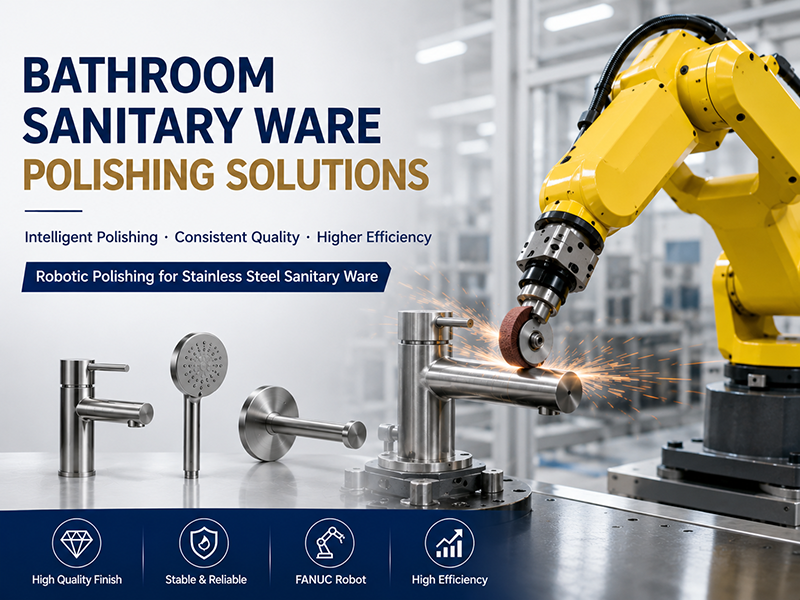

How Robots Detect Workpieces
In automated grinding and polishing systems, accurate workpiece detection is essential for ensuring precision and efficiency. Unlike manual operations, robots rely on advanced technologies such as vision systems, sensors, and intelligent algorithms.
- Vision Systems (Machine Vision)
Machine vision is the most commonly used technology for workpiece detection.
- 2D cameras detect shape and position
- 3D vision systems capture depth and contour
- AI algorithms analyze object features
Robots can identify the exact position, orientation, and size of the workpiece.
- Laser Scanning Technology
Laser scanners are used for high-precision detection:
- Generate 3D point cloud data
- Detect surface irregularities
- Suitable for complex geometries
Ideal for casting parts and irregular shapes.
- Force Sensors (Contact Detection)
Force control helps robots “feel” the workpiece:
- Detect contact pressure
- Adjust grinding force automatically
- Prevent over-processing
Ensures consistent polishing quality.
- Positioning Fixtures & Calibration
In many production lines, fixtures are used to assist positioning:
- Fixed positioning of workpieces
- Robot calibration improves accuracy
- Reduces detection complexity
Suitable for mass production.
- AI & Smart Recognition
Artificial intelligence is transforming robotic detection:
- Deep learning for object recognition
- Adaptive to different product types
- Self-optimization over time
Enables flexible manufacturing.
- Integration with CNC & Production Lines
Robots can also receive positioning data directly:
- CNC machine data transmission
- MES system integration
- Automated workflow control
Reduces the need for repeated detection.
- Why Workpiece Detection Matters
Accurate detection directly impacts:
- Processing accuracy
- Surface quality
- Production efficiency
- Automation level
- Future Trends in Robot Detection
The future of robotic detection includes:
- AI + Vision integration
- Real-time adaptive control
- Fully automated smart factories
Smarter, faster, and more flexible systems.
- Conclusion
Workpiece detection is the foundation of robotic grinding and polishing systems. By combining vision systems, sensors, and AI technologies, modern robots can achieve high precision, flexibility, and efficiency in metal processing.
If you are looking for advanced robotic grinding and polishing solutions with intelligent detection systems, we provide customized automation solutions for your production line.